The Dog Language Handbook: Read Your Dog | Nicole & Nora

The Dog Language Handbook · Interactive

Will you catch the signs in time?

Your dog tells you when something is wrong long before the growl, the snapped leash or the vet visit. This handbook teaches you to read the early signs of stress, discomfort and illness that most owners miss, so small worries never become big problems.

  • Instant download
  • Interactive: tap, slide, play
  • Works on any phone, no app
  • 7-day money-back guarantee
  • Written by the humans behind Nicole & Nora
The Dog Language Handbook coverInteractive
  • 12chapters, in the order you need them
  • ~2 hto read it all, a lifetime to use it
  • 20signals in the final test, with a certificate
  • 50,000+dog owners read our guides each month
  • 7 daysmoney back, no questions

Recognise your dog?

Four things dog owners tell us every week, and what the handbook does about each one.

Growls, snaps, "out of nowhere"

  • You've been surprised by a growl you didn't see coming
  • With visitors you hover, because you can't tell relaxed from stiff
  • You're not sure which growls are play and which are not
  • You've heard yourself say "he's never done that before"

How the handbook solves it

  • The stress ladder (chapter 8): the four quiet rungs that come before every growl, and where to step in
  • Calming signals (chapter 7): the twelve gestures a dog uses first, lip lick to look-away
  • The freeze (chapter 6): the last silent warning, and the one most people miss

Result: you meet your dog on rung one, when a step back fixes everything.

Wags, greetings and play that tip over

  • The tail was wagging, and then they snapped
  • At the park you can't tell play from the start of a fight
  • Greetings at the door are too much, and you don't know when to step in
  • Your dog is "friendly" right up until they aren't

How the handbook solves it

  • The tail (chapter 5): height, stiffness, speed and direction, and which wags mean "don't"
  • Happy, playful or too much? (chapter 10): what healthy play looks like and the exact moment to interrupt
  • Posture and movement (chapter 6): weight forward or back, loose and curvy versus stiff and straight

Result: you read a greeting in the first three seconds and call it before it tips.

Kids, hugs and "so patient"

  • Everyone says the dog is "so patient with the kids", and you hope they're right
  • Hugs get a yawn, a turned head or a slow blink you can't place
  • The dog walks away from the children and comes back, and walks away again
  • You'd like a rule the kids can actually follow

How the handbook solves it

  • Dogs and children (chapter 11): the hug test, the signals kids miss, and three house rules that keep everyone safe
  • The eyes (chapter 2): whale eye and the hard stare, the two looks that mean "please stop"
  • The mouth (chapter 4): the closed mouth, the yawn that isn't tiredness, the "smile" that isn't one

Result: "patient" stops being a guess. You know when to let it be and when to end it.

"They just seem… off"

  • Suddenly clingy, or suddenly distant
  • Licking one spot, panting at rest, slow to jump on the sofa
  • You can't tell stressed from sick, so you wait, and worry
  • The vet asks "since when?" and you don't know

How the handbook solves it

  • Stressed or sick? (chapter 9): the stress-or-pain table and the early signs of illness that show up as "behaviour"
  • Read the whole dog (chapter 1): how to learn your own dog's baseline, so "off" stands out the same day
  • Quick-reference charts (chapter 12): the stress-or-pain table on your phone, ready for the vet

Result: you know when it's a vet call and when it's a quiet day, and you can say since when.

Get the handbook $19.99

Try one tool from the handbook

This is the final test, exactly as it appears inside. Five of the twenty signals. Relaxed, or needs space?

1 / 5

A taste of what's inside

Flip through a few pages. Swipe on your phone, or use the arrows.

Chapter 2 · The eyes

Soft eye, hard eye, whale eye

The eyes change first. Learn the three looks and you'll rarely be surprised by your dog again.

Soft eyeAlmond-shaped, relaxed lids, slow blinks. A gaze that comes and goes. All is well.
Hard eyeRound, fixed, unblinking. Often with a closed mouth. "Back off."
Whale eyeThe whites show at the corner while the head stays still. A quiet request for space.
What to doSoft: carry on. Hard or whale: stop, add distance, wait for the face to soften.

Try it tonight: watch your dog's eyes while you reach for their collar. Slow blink, or a flick of white?

Sample page · The Dog Language Handbook

Chapter 7 · Calming signals

The 12 quiet ways your dog says "this is a bit much"

Turid Rugaas named them calming signals. Your dog uses them with other dogs, and with you, all day long.

  • Lip lick with no food around
  • Yawn when not tired
  • Turning the head away
  • Sudden interest in sniffing
  • Walking in a curve, not a line
  • Slowing down or freezing briefly
  • Sitting or lying down
  • Shake-off, as if wet
  • Blinking, squinting
  • Play bow used to defuse
  • Splitting up two others
  • Wagging low and slow

One signal is a comment. Three in a row is a request. Notice the stack.

Sample page · The Dog Language Handbook

Chapter 9 · Stressed or sick?

When it's a vet call, not a training issue

Stress and pain look alike from the outside. This table is the one owners tell us they photograph and keep.

You noticeOften stressOften pain or illness
PantingAfter something happened; stops when calmAt rest, at night, no obvious trigger
LickingLips, quick, in a tense momentOne spot on the body, over and over
HidingDuring a trigger, then back to normalNew, for days, not tied to anything
Won't jump upRareCommon. Check with your vet.

When in doubt, film it and show your vet. Thirty seconds of video says more than any description.

Sample page · The Dog Language Handbook

Chapter 11 · Dogs and children

The hug test

Most bites to children happen during affection, not aggression. Here is how to know whether your dog is enjoying it.

Enjoying itLeans in, stays, soft eyes, mouth loose or open, tail sweeping, comes back for more when released.
Tolerating itStill, closed mouth, whale eye, ears back, lip lick, head turned away, leaves the moment they can.

The rule we teach kids: invite, don't grab. Pat your leg, let the dog choose to come. If they don't, that's an answer too.

Every "tolerating" signal is a chance to step in kindly, before your dog has to say it louder.

Sample page · The Dog Language Handbook

Sample pages are shortened for the web. The handbook goes deeper on every one, and every chapter has something to tap, slide or play.

Why "out of nowhere" never is

Dogs escalate in order, like climbing a ladder. Tap a rung to see what it looks like and what to do. The whole handbook is about meeting your dog on rung one.

What's inside

One clear guide, in the order you need it. Tap a chapter.

1Read the whole dog

Why single signals lie, how to read in clusters and context, and how to learn your own dog's baseline.

2The eyes

Soft eye, hard eye, whale eye, and what a blink can tell you.

3The ears

Reading ears on floppy breeds, the difference between forward, neutral and pinned, and the one ear position that means fear.

4The mouth

Loose versus tight, lip licks, yawns, panting, and when a "smile" isn't one.

5The tail

Height, stiffness, speed and direction. Which wags mean "come closer" and which mean "don't".

6Posture and movement

Loose and curvy versus stiff and straight, weight forward or back, the play bow, the freeze, hackles and shake-offs.

7Calming signals

The twelve quiet gestures dogs use to keep the peace, and how to answer them.

8The stress ladder

How dogs escalate, why growls are information, and where to step in.

9Stressed or sick?

Telling stress from pain, the early signs of illness that show up as "behaviour", and when to call the vet.

10Happy, playful, or too much?

What healthy play looks like, when to interrupt, and how to read a greeting between two dogs.

11Dogs and children

The hug test, the signals kids miss, and simple rules that keep everyone safe.

12Quick-reference charts

Relaxed versus stressed at a glance, the calming-signal checklist, the stress ladder and the stress-or-pain table, ready to screenshot or print.

★The final test and your certificate

Twenty signals, one after another: relaxed or needs space? Score 17 or more and a Dog Whisperer certificate with your name appears, ready to print.

What changes, and when

Nothing to practise in sessions. You simply start seeing the dog in front of you.

  1. Tonight
    Chapters 1, 7 and 8, about an hour. You know the twelve calming signals and the four rungs that come before a growl.
  2. Tomorrow's walk
    You catch the first lip lick and head turn at the gate, and give space before anything happens. It feels like a trick. It isn't.
  3. Week 1
    You know your own dog's baseline: what relaxed looks like on them, their ears, their tail, their mouth. "Off" now stands out the same day.
  4. Week 2
    Greetings and play have an interrupt point you can see coming. Children and visitors get the hug test. "Patient" stops being a guess.
  5. A month in
    "Out of nowhere" has stopped being a sentence you say. Score 17 or more on the final test and print the certificate. Then keep the charts on the fridge for the next fourteen years.

Who it's for

Get it if you…

  • have a new dog or puppy and want to start right
  • have ever been surprised by a growl, a snap or a "sudden" reaction
  • have kids, visitors or other dogs around your dog
  • want to know when "off" means "vet" before it gets expensive
  • prefer understanding your dog to correcting them

Skip it if you…

  • are looking for a step-by-step training plan for one problem. That's what our plans are for
  • want obedience commands. This is about listening, not commanding
  • only need the basics. The free cheat sheet may be enough
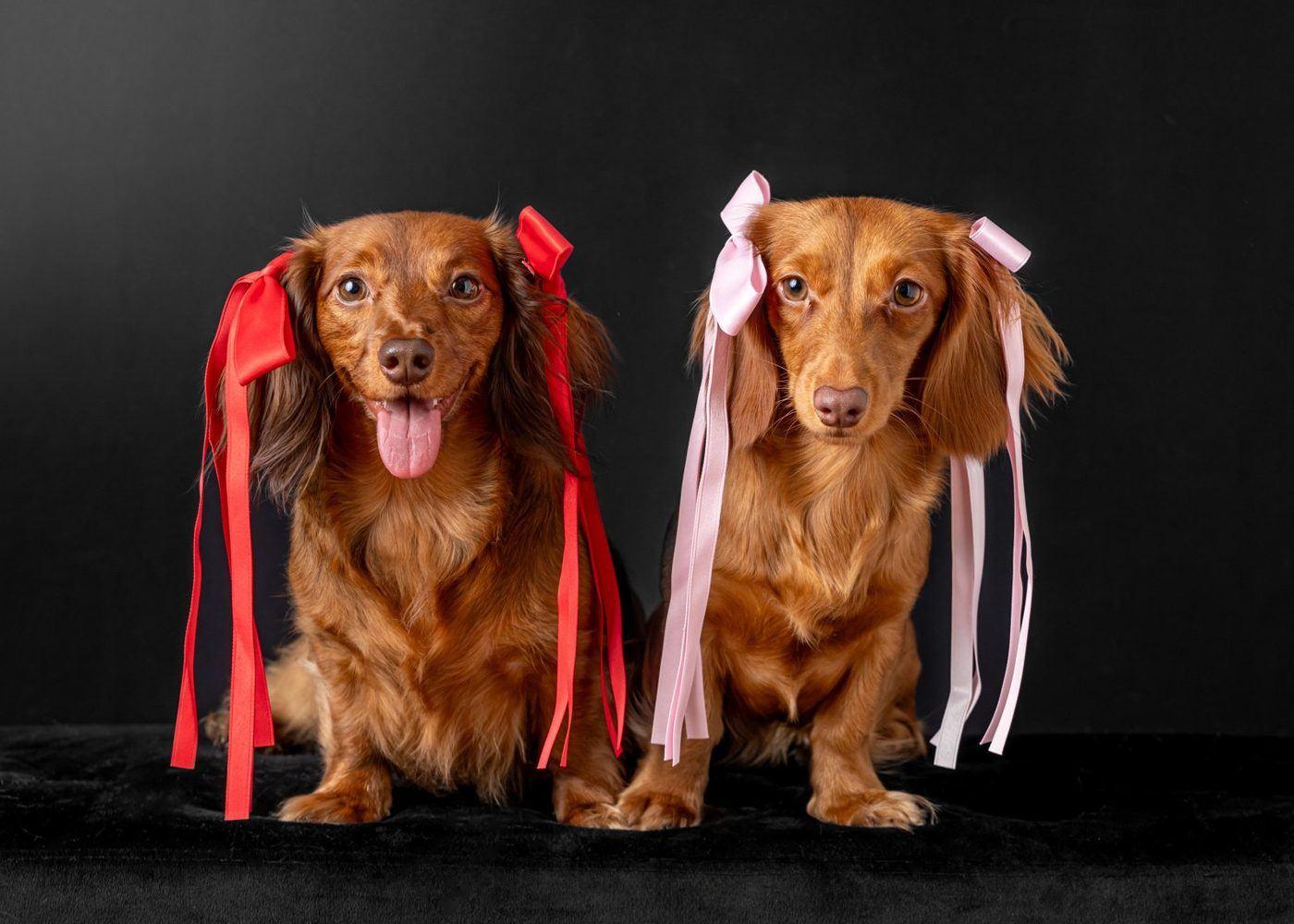
Nicole and Nora, two long-haired miniature dachshunds with ribbons

From the humans behind Nicole & Nora

We didn't set out to write a handbook. We set out to understand two small dachshunds who seemed to change their minds "for no reason". The more we learned to read them, the fewer reasons there turned out to be. Every signal had been there all along.

This handbook is everything we wish someone had handed us on day one, written plainly, with no fear-based methods and no jargon. It's the same approach behind the blog that more than fifty thousand dog owners read each month, in one place and in order.

Force-free, always. Educational content, never a substitute for your vet.

No time?

Two hours to read. Fourteen years to use. Read one chapter at bedtime and use it on the morning walk; there are no exercises to schedule, because the practice is the walk you already take.

The first thing the handbook gives back is time: a dog you can read is a dog you stop second-guessing, and walks, greetings and vet decisions all get quicker.

Money-back guarantee

If within 7 days of buying you decide the handbook isn't for you, email us and we'll refund it in full. No conditions, no questions. Details in our refund policy.

Get the handbook $19.99

Questions

What format is the handbook?

An interactive HTML handbook you download straight after purchase and open in any browser on your phone, tablet or computer. No app, no login. Twelve chapters with things to tap, slide and play, quick checks, a final test with a certificate, and printable charts. Your progress saves on your device.

Is it for a specific breed?

No. Dog body language is the same across breeds. We're dachshund people, so the examples lean small and long, but everything in it applies to any dog.

How is it different from the free cheat sheet and the blog?

The cheat sheet is one page of signals. The blog covers one signal per post. The handbook puts it all in one place, in order, with the early signs of stress and illness that the free material only touches on.

What if it's not for me?

Email us within 7 days of purchase and we'll refund it in full. Details in our refund policy.

Is it force-free?

Yes. Nothing in the handbook uses fear, pain or intimidation. It's about understanding your dog, not controlling them.

Your dog has been talking all along

Learn to listen with your eyes. Read it tonight, use it tomorrow morning on the first walk.

Get the handbook $19.99

Not today? Follow us on Gumroad and hear the moment a new handbook comes out.