The Puppy First 30 Days Kit: 22 Things to Buy Before Your Puppy Comes Home

The first month with a puppy is not about obedience. It is about sleep, toilet trips, chewing the right things, seeing the world calmly, and a few habits that protect a growing body. Most of that needs almost nothing. A little of it needs the right gear, bought before the puppy arrives rather than at 11pm on the second night. This is that list: twenty-two things, grouped by the job they do, with what to look for so you buy once. We have picked the versions we would actually want in our own home: pale wood, cream, lilac and pink rather than black nylon and grey plastic, without giving up anything that matters. A puppy does not need a wardrobe; a puppy needs a crate they like and a human with a treat pouch.
A quick note: some of the links below are affiliate links, which means we may earn a small commission if you buy through them, at no extra cost to you. It never changes what makes this list. As an Amazon Associate we earn from qualifying purchases. If you would rather see everything in one place, the whole kit is on our Amazon list.
Sleep and a safe place
Puppies need eighteen to twenty hours of sleep a day, and almost every "bad" puppy behavior people write to us about, the evening biting, the zoomies, the barking at nothing, is an overtired puppy who was never put to bed. The crate and the pen are how you make sleep happen. Neither is a punishment; both are where meals, chews and naps happen from day one.

Wooden dog crate house with drawer Start here
A crate that looks like a bedside table, with an arched door, a drawer for the leads and treats, and a light wood finish that sits happily in a living room. Puppies sleep better in a crate that feels like a den, and you will use it more if you are not hiding it behind the sofa.
What to pick: Sized for a small or medium adult dog; there is no divider, so let the puppy use the pen for the first weeks and move them in as they grow. A serious chewer may need a wire crate for the teething months, then this for life.

TORONTOKYO wooden 10-panel playpen
A pen is the difference between a puppy who is supervised and a puppy who is chewing the skirting board while you make tea. This one is pale wood with mesh panels, folds flat, and turns any corner of a room into a puppy-proof nursery: crate inside with the door open, water bowl, a mat, a toy.
What to pick: Ten panels gives you a big circle or a long fence across a room. Check the height against your breed; a jumper needs the taller version.

Pumpkin donut puppy bed, white
A round, ridged donut bed that a puppy curls into like a nest. The raised rim is what they lean into to feel safe, which is why nearly every puppy chooses a donut over a flat mat. It goes in the washing machine, which by week two you will be grateful for.
What to pick: The 20-inch size for a puppy or small breed. Buy two, so one is always clean. It will be chewed at some point; that is what the second one is for.

Freestanding acacia pet gate with door
Stairs are one of the few things that can hurt a puppy in the first month, and for long-backed breeds like ours the rule is no stairs at speed, full stop. A freestanding wooden gate with a walk-through door keeps the puppy in the puppy zone without a pressure bar marking the doorframe.
What to pick: Freestanding gates are for doorways and the bottom of the stairs, never the top. Eight panels folds into any shape; check the bar spacing for a toy breed.
Toilet training
The routine does the work: outside every hour while awake and after every sleep, meal, play and drink, with a treat within two seconds of them finishing. The gear does two things: it removes the smell so the puppy does not go back to the same spot, and it gives you a plan for the nights and the rain.

Skout's Honor Dog Urine Destroyer
Ordinary cleaners mask the smell for you and leave it for the dog, who can smell the exact spot for weeks and reads it as the toilet. An enzyme cleaner digests the urine itself. This one is made for exactly that job, and the bottle is nice enough to leave on the side.
What to pick: The 35 oz spray. Soak the patch, leave it, blot. Never ammonia-based cleaners, which smell like urine to a dog.

Amazon Basics washable puppy pads
We would rather every puppy learned to go outside from day one, and most can. But a tiny puppy in a flat, a January night, or a breed that hates wet grass sometimes means an indoor spot in the pen for the first weeks. Washable pads look like a doormat, not a nappy, and you are not throwing thirty of them away a week.
What to pick: Two in a pack so one is in the wash. Use them in one place only and move them toward the door as the weeks pass. The aim is to stop needing them.
Walks and training
Once vaccinated, walks are five minutes per month of age, twice a day, on a harness, never a collar. Before that, the puppy is carried out to see the world. Training in the first month is the name, a hand touch, a settle on a mat, and a recall that always pays. The kit for all of that fits in one pocket.

Wild One harness, lilac Never a collar
A soft, padded, Y-fronted harness in the colours you actually want on your dog: lilac, navy, blush, moss. It leaves the shoulders free, has a clip front and back, and stays put on a wriggler. It is the harness we see most on the prettiest dogs on Instagram, and it is properly made.
What to pick: Measure the chest and buy the size the puppy is now, not the one they will grow into. You will buy a second at adult size. For a dachshund or any long-backed breed, the Y-front matters more than anything.

A hand-made cotton rope lead in cream with a brass clip. It looks lovely, it is soft on your hands, and it is the right weight for a puppy. Rope has a little give, which is kinder on a small neck and shoulders than a flat nylon strap when a puppy stops dead to sniff.
What to pick: Five or six feet, the thinner rope for a small breed. Wipe clean; it will pick up mud. No retractable leashes, ever: they teach pulling and give you no control.

The recall tool. A long line on a harness lets the puppy explore a field, sniff, and learn that coming back to you pays, without ever practising running off. Biothane is the material to have: it does not soak up water or mud, it wipes clean, and it comes in pink.
What to pick: Ten to fifteen feet for a puppy; move to twenty or thirty for an adolescent. Clip it to the harness, never the collar.

Pink magnetic treat pouch with clicker
Timing is everything in the first month, and the timing depends on the treat being in your hand within a second. A pouch on your hip does that. The magnetic mouth opens with one hand and snaps shut when the puppy is investigating. The clicker is a bonus if you want to learn to use one, and this one is pink.
What to pick: Belt clip or waist strap, either works. Fill it with kibble for easy moments and the good stuff for recalls and vet handling.

Bocce's Bakery Quack Quack Quack training treats
Small, soft duck-and-blueberry treats from a small bakery with a short ingredient list and packaging you will not mind on the kitchen counter. Puppies under six months need something they can swallow fast; a hard biscuit interrupts the training.
What to pick: Break them in half for a toy breed. For the highest-value moments, vet visits, recall in a field, nothing beats small cubes of chicken or cheese from your fridge.
Chewing and enrichment
Puppies chew. It is not a problem to solve; it is a need to direct. From about twelve weeks the adult teeth push through and the need gets urgent. Give a puppy the right things to chew and lick, and a bored puppy becomes a busy one. Twenty minutes of nose work tires them out more than an hour of running, and a tired puppy is a calm one.

The pretty alternative to a KONG, in soft pastel colours, and easier to fill and clean. Stuff it with soaked kibble and freeze it, and you have a fifteen-minute chew that settles a puppy in the crate, in the pen, or in the car. Frozen Toppls are how we teach a puppy that being left alone predicts something good.
What to pick: Small for most puppies, large for a bigger breed. Buy two, so one is always in the freezer; they nest together to make it harder as the puppy gets cleverer.

Two softer chews shaped so a puppy can hold them in their paws, in real bacon flavour, in a colour that does not look like a dog toy. A puppy who has a legal chew in reach is a puppy who is not chewing your shoes. Keep one in every room the puppy uses.
What to pick: The puppy version is softer than the adult range; move up at around six months. Take a chew away once it is small enough to swallow.

Licking is calming for dogs; it lowers the heart rate and gives an anxious or overtired puppy something to do with their mouth. Smear the mat with wet food or plain yogurt, freeze it, and hand it over at the moments that are hard: nail trims, the bath, the first evenings alone. This one is made in the USA from natural rubber and comes in soft colours.
What to pick: Buy two, so one is in the freezer while the other is in use. Supervise a strong chewer.

Flower-petal snuffle mat, pink
A snuffle mat you hide kibble in, so the puppy eats a meal with their nose, and this one is shaped like a bed of pink petals. It turns a thirty-second bolt of food into ten minutes of sniffing, and sniffing is the single best calming activity a dog has. We feed at least one meal a day this way for life.
What to pick: Start easy so the puppy succeeds, then hide the food deeper. It goes in the washing machine.

WHUD ceramic bowls on a wooden stand (with slow-feeder bowl)
Two cream ceramic bowls on a small wooden stand, one of them a slow-feeder maze, so the puppy who inhales food eats with their tongue and a meal takes five minutes instead of thirty seconds. Ceramic is easier to keep clean than plastic, and it looks like it belongs in a kitchen.
What to pick: The small set for puppies and small breeds. The slight lift is comfortable for most dogs; for a deep-chested breed ask your vet about height.

For the things you cannot move: table legs, cables, the corner of the sofa. It tastes awful and does nothing else. It is not a substitute for supervision or for giving the puppy something better to chew, but it stops a habit forming in the week you are too tired to catch every mouthful.
What to pick: Test on a hidden patch of fabric first. Reapply every day or two; the taste wears off. Some puppies do not mind it, in which case the answer is more management, not more spray.
Handling and care
A puppy who learns in the first month that hands mean good things is easy at the vet, the groomer and the kitchen sink for the rest of their life. Thirty seconds a day: paws, ears, mouth, a brush, being held still, each followed by a treat. The tools below are the ones to introduce now, before you need them, and gently.
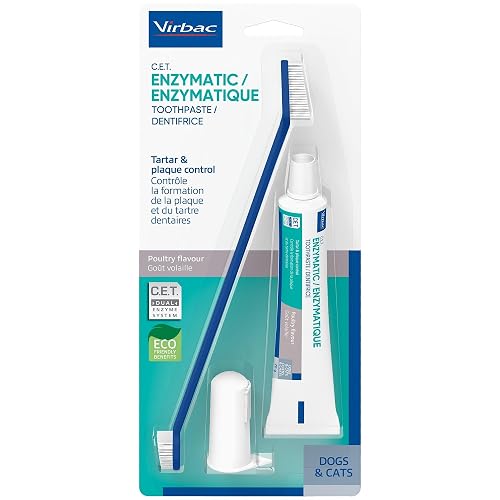
C.E.T. Oral Hygiene Kit (toothbrush and enzymatic toothpaste)
Dental disease is the most common problem vets see in adult dogs, and in small breeds it starts young. A puppy who has their teeth brushed from eight weeks accepts it for life; a three-year-old who has never had it done fights you. The enzymatic toothpaste works even when the brushing is quick, and dogs like the poultry flavor.
What to pick: Start with a finger and a smear of paste, no brush, for a week. Then the brush on the front teeth only. Never use human toothpaste.

Bamboo Groom soft slicker brush
Every puppy needs to learn that a brush is boring, whatever their coat, and for anything longhaired or curly it is a daily job by six months. A soft slicker with a bamboo handle is the one to start on: gentle pins, a nice thing to hold, and it lives on a shelf without looking like a tool.
What to pick: Small or medium; the soft version for a puppy. Brush for ten seconds, treat, stop while they are still happy. Longer coats will need a comb as well later.

LuckyTail whisper-quiet nail grinder
Nails are the handling job most owners give up on, and long nails change how a dog stands and hurt the joints. A grinder takes off a little at a time with no risk of cutting the quick. This one is small, quiet and low-vibration, which is what makes the difference for a nervous puppy.
What to pick: Introduce it switched off first, then running near the puppy, then touching one nail. Two weeks of that before you grind anything.

Burt's Bees tearless puppy shampoo
Puppies rarely need a bath in the first month, but when they roll in something you want a mild, tearless shampoo that does not strip a coat that has not finished growing in. This one is gentle and the buttermilk version smells of very little.
What to pick: Lukewarm water, a non-slip mat, treats throughout, and rinse more than you think you need to. Once a month at most unless there is a reason.
The first evenings alone

ThunderEase (Adaptil) calming diffuser kit
A plug-in that releases a copy of the pheromone a mother dog produces for her puppies. It is not magic, and the evidence is mixed, but many vets recommend it for the first weeks in a new home and we have seen it take the edge off the first nights. Plug it in near the crate a day before the puppy arrives.
What to pick: The starter kit with the diffuser and one refill; each refill lasts a month. It is odorless to us. Use it alongside the alone-time practice in our separation anxiety guide, not instead of it.
What is not on the list
A collar, other than a light one to carry the ID tag. Retractable leashes. A bed that costs more than the crate. Anything that sprays, shocks or makes a noise to stop a behavior. Puppy shoes. A wardrobe. And, at least until the vet has seen them, anything from the treat aisle with a list of ingredients longer than your shopping list.
Buy the crate, the pen, the harness, the enzyme cleaner and a treat pouch before the puppy comes home; all twenty-two are on our Amazon list if you want them in one basket. Add the rest in the first fortnight as you find out what your puppy is like. And for what to do with all of it, in what order, our Puppy Start Plan turns the first fourteen days into a tick list.
Common questions
What do I really need before bringing a puppy home?
A crate the puppy can sleep in, an exercise pen, a washable bed, an enzyme cleaner, a Y-shaped harness with a five or six-foot leash, a treat pouch and soft training treats, and a couple of safe chews such as a Toppl or a puppy Benebone. Everything else can wait until you know your puppy.
Should a puppy wear a collar or a harness?
A harness for walking, always, and especially for long-backed or small breeds where pressure on the neck can damage the throat or spine. A light collar is fine for carrying an ID tag. Never attach a leash or a long line to a collar on a puppy.
Do I need puppy pads?
Most puppies can learn to go outside from day one with a strict routine, and that is the faster route. Pads make sense for a tiny puppy in a flat, for overnight in the pen in the first week or two, or for a breed that refuses wet grass. Use them in one spot only and phase them out.
Is your dog's bowl working for them?
Take the free Dog Nutrition quiz for a feeding plan matched to your dog.
Take the Nutrition Quiz →Now the plan for using it
The gear is the easy part. The Puppy Start Plan is fourteen days of what to do, in what order: potty, biting, crate, sleep, alone time and the first walks, with a tick-box tracker that saves on your phone.
See the Puppy Start Plan ($14)Keep reading

How to Stop Puppy Biting for Good
Puppy biting is normal and fixable. Learn how to teach bite inhibition, redirect the nipping, handle the overtired witching hour, and stop puppy biting for good.
Read more →
How to Help a Puppy Sleep Through the Night
Puppy waking, whining, or crying at 3am? Why puppies struggle to sleep through, a calm bedtime routine that works, and realistic expectations by age.
Read more →
The Puppy Socialization Checklist
A gentle puppy socialization checklist covering sounds, people, other dogs, and vet handling, so your puppy grows into a calm, confident adult.
Read more →